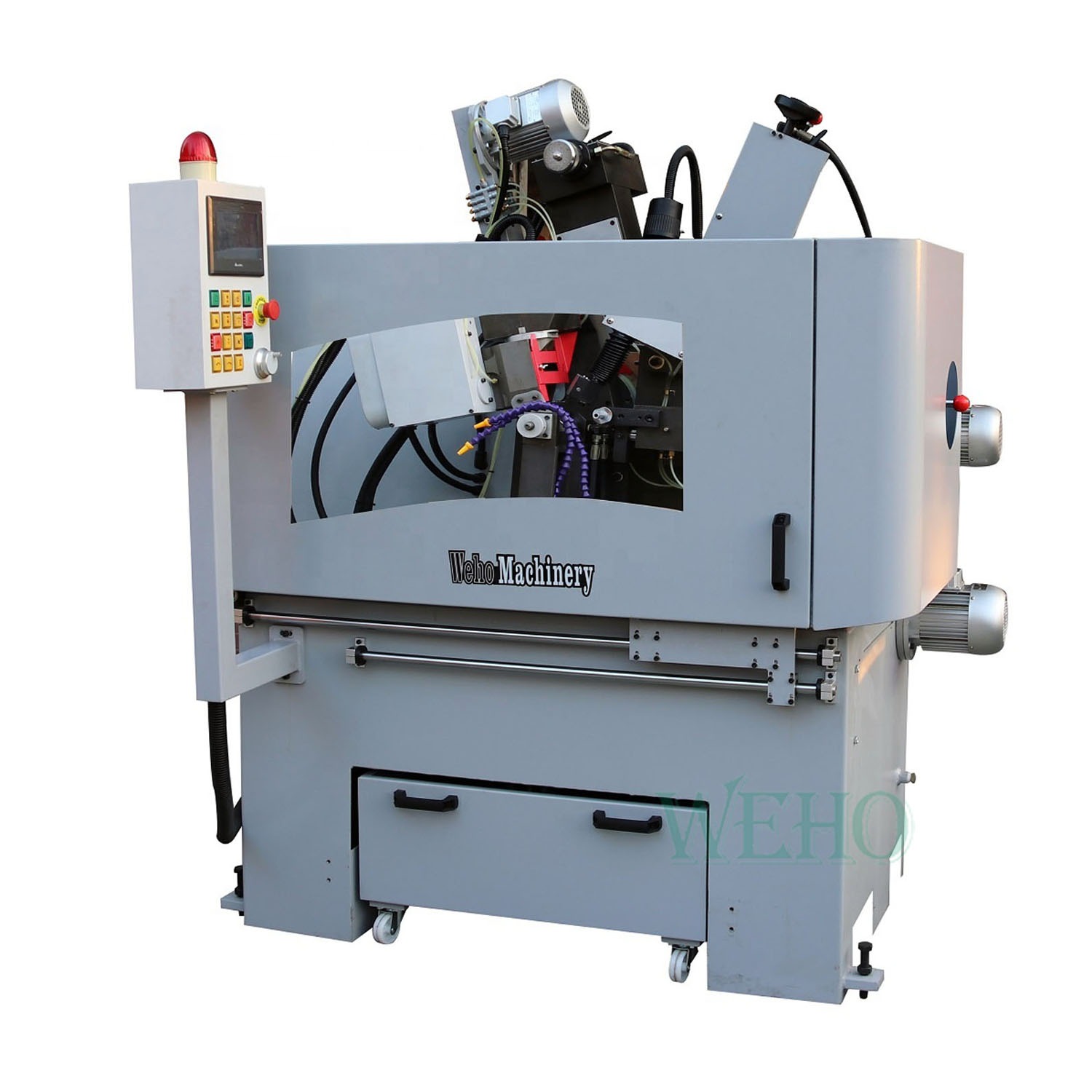
Best Carbide Saw Blade Sharpening Machine in 2026
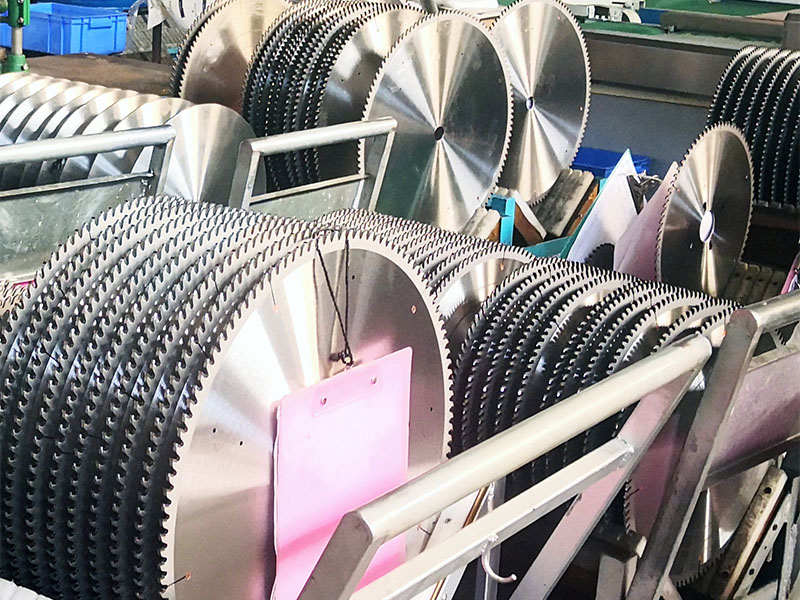
Carbide saw blades are widely used in wood processing and metal cutting industries. Sharp blades ensure clean cuts and stable production quality. However, carbide tips wear down after long periods of use. A reliable sharpening machine helps restore blade performance quickly. In this article, we explain how carbide saw blade sharpening machines work and how to choose the right one.
What Is a Carbide Saw Blade Sharpening Machine
A carbide saw blade sharpening machine is equipment designed to grind and restore carbide-tipped saw blades. It removes worn material from the tooth edge and rebuilds the cutting angle. The machine uses a precision grinding wheel to sharpen the carbide tips. Accurate positioning ensures each tooth is ground evenly. This helps maintain cutting performance and blade life.
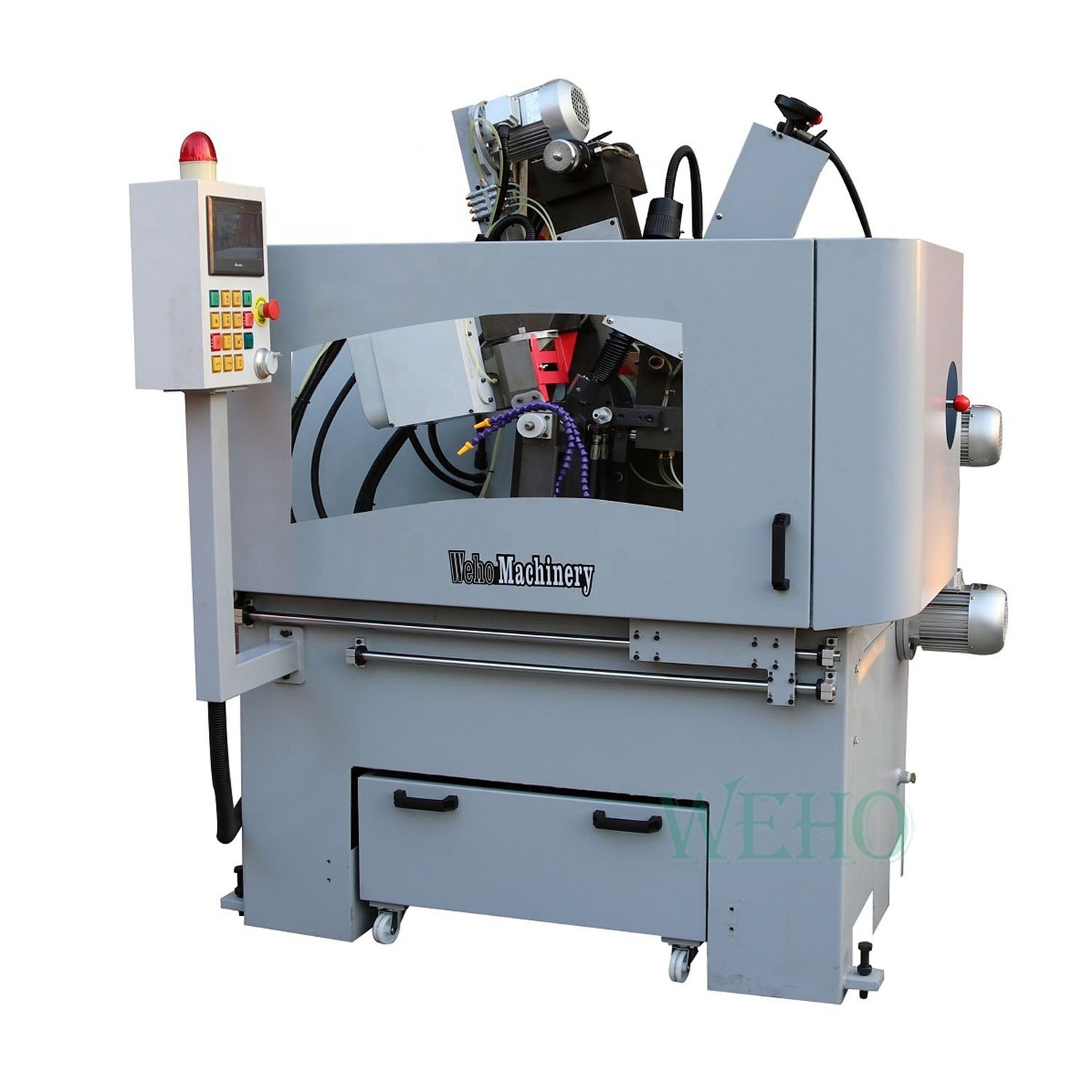
Key components of the machine
| Component | Function | Importance |
| Grinding wheel system | Sharpens carbide teeth | Determines sharpening quality |
| Clamping system | Fixes the blade during grinding | Ensures stability |
| Indexing system | Moves blade tooth by tooth | Enables automatic sharpening |
| Control system | Adjusts grinding parameters | Improves precision |
Industries that rely on these machines
- Wood Processing Factories
Woodworking factories use carbide blades for cutting boards, plywood, and furniture materials. Regular sharpening maintains cutting efficiency.
- Metal Cutting Factories
Metal cutting operations require precise blade edges. Sharpening machines help maintain consistent cutting performance.
- Saw Blade Manufacturers
Saw blade manufacturers use sharpening machines for blade finishing and repair services.
Carbide Saw Blade Sharpening Machine vs Manual Sharpening
Precision and Consistency
Manual sharpening often depends on operator experience. Grinding angles may vary between teeth. Machine sharpening ensures uniform grinding angles. Each tooth receives consistent treatment.
Production Efficiency
Manual grinding takes more time. Operators must adjust the blade frequently. Automatic machines sharpen blades much faster. This improves workshop productivity.
Labor Cost Reduction
Manual sharpening requires skilled technicians. Training takes time and cost. Automatic machines reduce dependence on manual labor. One operator can handle multiple machines.
Blade Lifespan Improvement
Incorrect grinding can damage carbide tips. This shortens blade life. Precision machines control grinding pressure and angles. Proper sharpening extends blade service life.
These advantages make carbide blade sharpening machines essential for modern factories.
Machine vs Manual Sharpening
| Factor | Manual Sharpening | Machine Sharpening |
| Precision | Depends on operator | High and consistent |
| Efficiency | Slow | Fast |
| Labor cost | High | Lower |
| Blade lifespan | May decrease | Longer blade life |
These advantages make carbide blade sharpening machines essential equipment for modern factories.
Key Features to Look for in a Carbide Blade Sharpening Machine
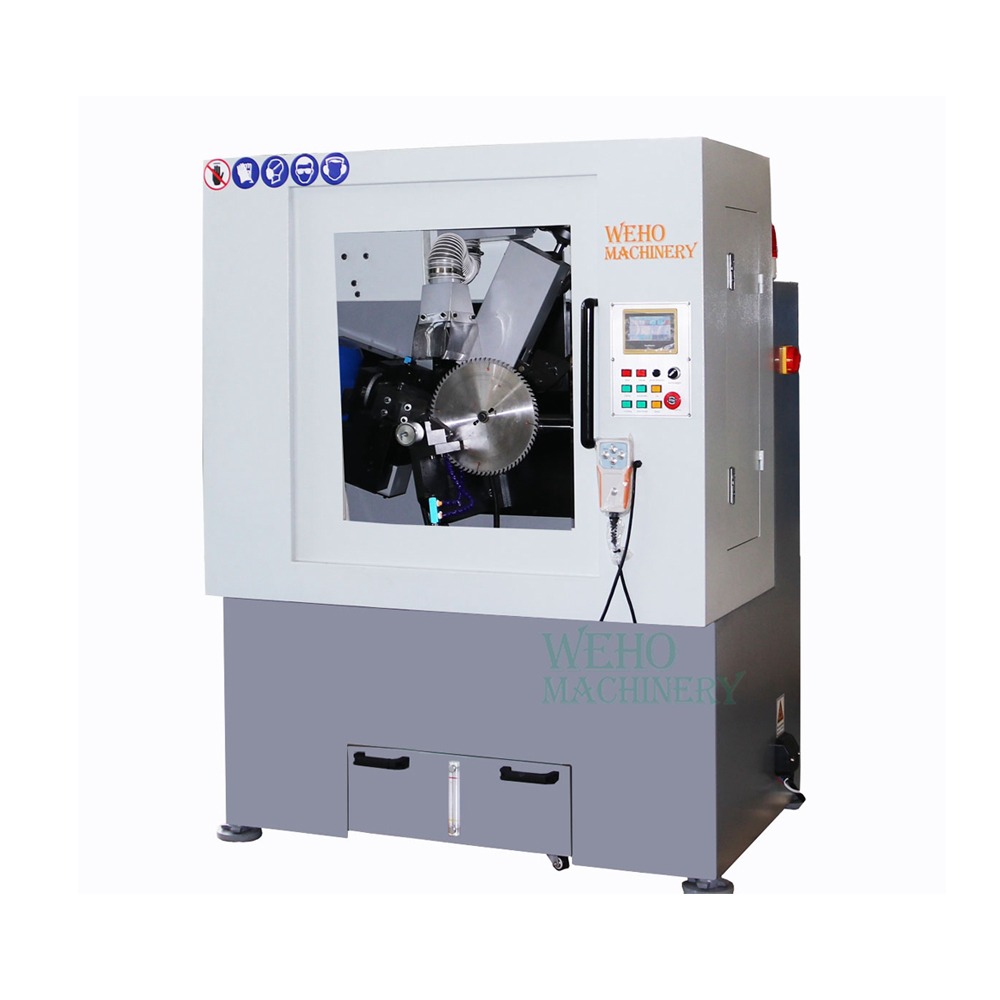
High Precision Grinding System
Precision grinding ensures accurate tooth geometry. This directly affects cutting quality. A stable grinding system helps maintain consistent blade performance.
Automatic Operation
Automatic indexing and feeding reduce manual work. The machine can sharpen multiple teeth continuously. This greatly improves efficiency.
Wide Compatibility
Good machines support different blade sizes and tooth types. This is useful for factories that process multiple blade models.
Durable Machine Structure
A strong machine frame reduces vibration during grinding. Stable structures improve sharpening accuracy.
Easy Operation and Maintenance
User-friendly control panels simplify machine operation. Easy maintenance reduces downtime and operating costs.
Types of Carbide Saw Blade Sharpening Machines
Manual Sharpening Machines
Manual machines require more operator involvement. They are usually lower in cost. Small workshops often choose this type.
Semi-Automatic Sharpening Machines
Semi-automatic machines combine manual control with automatic indexing. They offer better efficiency. Many small and medium factories prefer this option.
Fully Automatic Sharpening Machines
Fully automatic machines use advanced control systems. They provide high precision and stable operation. Large factories and saw blade manufacturers often use these machines.
Machine Type Comparison
| Machine Type | Automation Level | Suitable Users |
| Manual machine | Low | Small workshops |
| Semi-automatic | Medium | Small and medium factories |
| Fully automatic | High | Large factories and blade manufacturers |
Common Problems in Saw Blade Sharpening
After long-term use, some grinding machines may lose accuracy. Grinding angles may shift. Tooth shapes may become inconsistent. Machine vibration can also affect sharpening quality.
Modern carbide saw blade sharpening machines solve these issues. Precision guides improve positioning accuracy. Stable machine structures reduce vibration. Automatic control systems ensure consistent grinding results.
Cost of Carbide Saw Blade Sharpening Machine
The price of a carbide blade sharpening machine depends on several factors.
- Automation level
- CNC control system
- Grinding precision
- Supported blade diameter
Manual machines are the most affordable. Semi-automatic machines are mid-range. Fully automatic machines require higher investment but deliver better productivity.
Factories should choose machines based on production scale and sharpening demand.
Why Many Factories Choose WEHO Sharpening Machines

WEHO provides reliable sharpening machines for industrial applications. The machines are designed for high precision and stable operation. Strong machine structures ensure consistent grinding performance.
WEHO machines support different blade sizes and tooth types. They are suitable for woodworking factories and metal cutting plants. The machines are easy to operate and maintain.
WEHO also offers professional technical support and global service. Many factories choose WEHO to improve blade maintenance efficiency and reduce production costs.
FAQs
Q:What blades can a carbide saw blade sharpening machine sharpen?
A:These machines are designed for carbide-tipped circular saw blades used in wood and metal cutting.
Q:How often should saw blades be sharpened?
A:It depends on usage frequency and cutting materials. Most factories sharpen blades when cutting quality begins to decline.
Q:Is automatic sharpening better than manual sharpening?
A:Yes. Automatic machines provide better precision, higher efficiency, and more consistent results.
Q:Can one machine handle different blade sizes?
A:Most modern machines support multiple blade diameters and tooth configurations.
Carbide saw blade sharpening machines play an important role in modern manufacturing. They improve cutting precision and extend blade life. Choosing the right machine helps factories reduce costs and maintain stable production.
WEHO provides reliable sharpening solutions for woodworking factories, metal cutting plants, and saw blade manufacturers. Contact WEHO to find the right sharpening machine for your production needs.