How to Maintain a Woodworking Blade Sharpening Machine
A woodworking blade sharpening machine works through repeated grinding, positioning, feeding, and blade handling. Regular maintenance helps keep these operations stable.
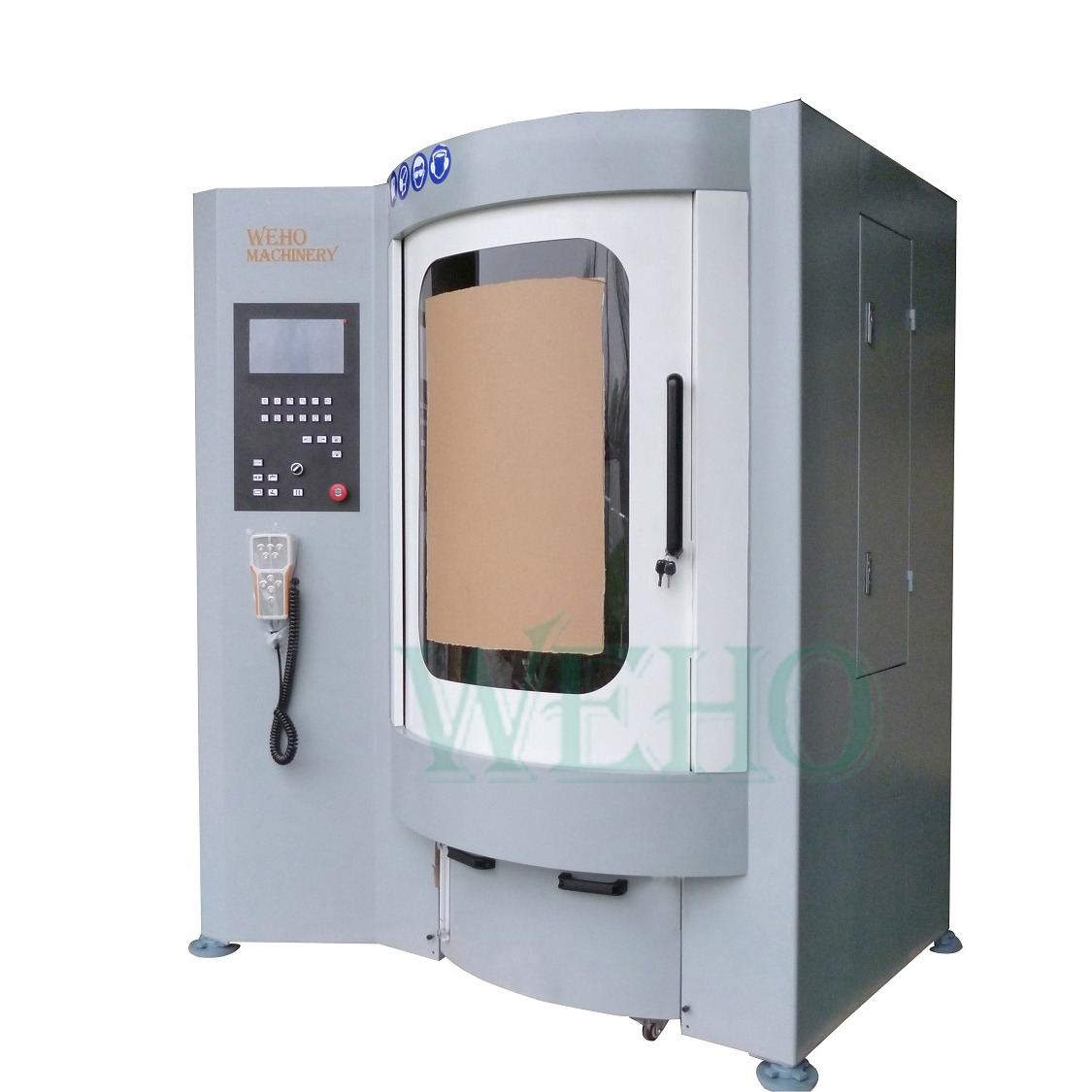
The maintenance requirements also vary between circular saw, HSS, straight knife, and band saw grinding machines. This guide explains the main areas to check and how maintenance relates to different WEHO sharpening machines.
Why Maintenance Matters for Sharpening Machines
A sharpening machine needs to maintain a stable relationship between the blade, grinding wheel, and machine movement.
When the grinding area becomes dirty, the grinding wheel wears, or blade positioning changes, grinding results can become inconsistent. Regular inspection helps identify these conditions before they affect production.
Maintain Grinding Accuracy
Grinding accuracy depends on more than the grinding wheel alone.
Blade positioning, machine movement, grinding wheel condition, and the machine's working settings all contribute to the final result.
For tooth-based blades, inconsistent positioning can affect tooth geometry. For straight knives, changes in blade positioning or machine movement can affect the grinding result along the blade length.
Regular checks help keep the machine working within its intended operating condition.
Reduce Unexpected Downtime
A sharpening machine can contain grinding wheels, moving components, blade fixtures, electrical controls, and other working parts.
Small problems are easier to identify during routine inspection than after they develop into a production interruption.
For industrial users, a simple maintenance routine can therefore be part of normal machine management rather than something performed only after a problem occurs.
Key Areas to Check on a Sharpening Machine
Different machines have different configurations, but several maintenance areas are common across woodworking sharpening equipment.
Check the Grinding Wheel
The grinding wheel directly contacts the cutting tool, so its condition should be checked regularly.
Look for visible wear, damage, abnormal grinding marks, or changes in grinding performance. The wheel should also match the machine and blade application.
The grinding wheel is not the same across every WEHO machine. For example, the HSS500-3A is designed for HSS circular saw blades and uses CBN grinding wheels. The MF2720 universal tool grinding machine is designed for TCT woodworking tools and uses a diamond grinding wheel.
This is why wheel selection should follow the machine specification and blade application rather than using one wheel type for every sharpening task.
Check Blade Positioning and Clamping
The blade must remain correctly positioned during grinding.
For circular saw blade machines, this means checking the blade mounting and positioning system before grinding. The blade should be securely held and correctly positioned for the intended grinding operation.
For straight knife grinding machines, the knife needs to be positioned correctly along the working table.
For band saw grinding machines, blade feeding and positioning are also important because the blade moves through the grinding process.
If the blade position changes during operation, the grinding result may become inconsistent.
Keep the Grinding Area Clean
Grinding produces dust, particles, and debris.
Accumulated material around the grinding area can interfere with normal machine operation and make inspection more difficult.
The grinding area, working surfaces, and accessible machine components should therefore be cleaned according to the manufacturer's operating instructions.
For band saw grinding, WEHO's MF-05 is equipped with an exhaust system for the fumes and emery dust produced during sharpening. The machine is designed for automatic band saw blade grinding and includes different feed speeds for different tooth types and sharpening requirements.
Check Moving Components
Sharpening machines contain moving parts that need to operate smoothly.
Depending on the machine, these can include:
- Grinding head movement
- Carriage movement
- Blade feeding components
- Guide systems
- Other mechanical moving parts
Check for abnormal movement, unusual resistance, or visible contamination.
Lubrication should follow the specific machine manual and manufacturer's recommendations. Avoid applying an unspecified lubricant simply because it is commonly used on other machines.
Maintenance by Machine Type
Maintenance should be related to the actual grinding application.
A TCT circular saw sharpener does not have exactly the same maintenance focus as an HSS circular saw machine or a straight knife grinder.
Circular Saw Blade Sharpening Machines
WEHO's CH800 is designed for carbide TCT circular saw blades. Its specified working range includes saw outside diameters from 120 to 810 mm, bore diameters from 10 to 220 mm, and maximum blade thickness of 10 mm.
For this type of machine, maintenance should pay particular attention to the grinding wheel, blade positioning, and grinding area.
Before operation, check that the blade is correctly mounted and that the grinding components are in suitable condition.
For side-grinding applications, the machine configuration also matters. Maintenance should therefore be based on the specific grinding process rather than treating every circular saw machine in the same way.
HSS Circular Saw Blade Sharpening Machines
HSS circular saw blade grinding requires a different machine configuration.
WEHO's HSS500-3A uses a CBN grinding wheel and three servo-controlled axes: X, Y, and Z. The machine supports triangular, arc, high-low, and variable-pitch tooth types.
Maintenance should focus on the grinding wheel, blade positioning, machine movement, and control system.
Because the machine uses servo-controlled axes, abnormal movement or positioning should not be ignored. If the machine does not operate as expected, the machine manual and qualified technical support should be consulted.
Straight Knife Grinding Machines
Straight knife grinding machines use a different grinding movement from circular saw sharpeners.
WEHO's MF2530AB provides a maximum grinding length of 3100 mm and a listed precision of 0.01–0.02 mm. Its cutter rest adjustable angle is 0–90°.
For this type of machine, maintenance should focus on the working table, grinding head movement, knife positioning, grinding wheel condition, and machine cleanliness.
The knife should be positioned correctly before grinding. The grinding head and carriage should also move smoothly throughout the working range.
The MF2530AC is another WEHO straight knife grinding machine. It is designed for industrial knife grinding and provides programmable work cycles for different grinding operations.
For these machines, maintenance should include routine checks of mechanical movement and the control system in accordance with the machine's operating instructions.
Band Saw Blade Grinding Machines
Band saw blade grinders have their own maintenance considerations because the blade is fed through the grinding process.
WEHO's MF-05 is designed for automatic band saw blade grinding. It supports blade thicknesses from 0.6 to 3 mm, blade widths from 27 to 150 mm, and a maximum grinding length of 5000 mm. Its maximum working speed is 18 teeth/min.
The blade feeding system, grinding wheel, grinding area, and tooth configuration should be checked as part of routine machine care.
For larger sawmill applications, the MF600 is designed for bigger sawmills. It supports band saw blades up to 125 mm wide, has a maximum grinding length of 8000 mm, and a working speed of 18 teeth/min. It can be used for carbide-tipped, HSS, BI dual band saw, and frame saw blades.
The maintenance approach should therefore reflect the actual blade type and working setup.
Grinding Wheel Maintenance
The grinding wheel deserves separate attention because it is directly involved in material removal.
Check for Wear
Grinding wheels gradually change with use.
Changes in grinding performance, surface condition, or the quality of the sharpened blade can be reasons to inspect the wheel.
The exact replacement or dressing procedure should follow the machine manufacturer's instructions.
Use the Correct Wheel for the Application
Different blade materials can require different grinding wheel configurations.
For example, the HSS500-3A uses a CBN grinding wheel for HSS circular saw blade grinding. The MF2720 uses a diamond grinding wheel for TCT woodworking tools.
The correct wheel should therefore be selected according to the machine and tool being processed.
Do Not Ignore Abnormal Grinding Results
If the blade suddenly produces a different grinding result, do not assume that the blade itself is the only cause.
Check the grinding wheel, blade mounting, machine settings, and machine movement before continuing production.
If the cause cannot be identified through normal operating checks, contact the machine manufacturer or qualified service personnel.
Common Problems and What to Check
Maintenance becomes more useful when it is connected to actual production symptoms.
|
Problem |
Areas to Check |
|
Uneven grinding |
Blade positioning, grinding wheel, machine setup |
|
Poor grinding quality |
Wheel condition, blade condition, machine settings |
|
Increased vibration |
Blade mounting, machine components |
|
Inconsistent tooth geometry |
Blade positioning, grinding settings |
|
Reduced grinding efficiency |
Grinding wheel, machine cleanliness |
|
Abnormal machine movement |
Guide system, mechanical components, control system |
These checks are starting points rather than fixed fault diagnoses.
A similar grinding problem can have different causes depending on the machine type and application.
A Practical Maintenance Checklist
A simple checklist can help operators incorporate maintenance into regular production.
|
Maintenance Item |
What to Check |
|
Grinding wheel |
Wear, damage, and grinding condition |
|
Blade fixture |
Positioning and clamping |
|
Grinding area |
Dust and debris |
|
Moving components |
Smooth movement and visible condition |
|
Guide system |
Movement and contamination |
|
Lubrication |
Follow machine instructions |
|
Control system |
Abnormal operation or movement |
|
Grinding result |
Consistency after sharpening |
The frequency of each check should depend on machine usage, operating conditions, and the manufacturer's instructions.
There is no single maintenance interval that applies to every woodworking sharpening machine.
When Does a Sharpening Machine Need Professional Service?
Routine maintenance can help identify problems, but not every issue should be solved by the machine operator.
Grinding Accuracy Changes
If grinding results become inconsistent while the blade and normal operating conditions remain unchanged, the machine may need further inspection.
Check the blade positioning, grinding wheel, and machine settings first.
Abnormal Noise or Vibration
Unusual noise or vibration should not be ignored.
Stop and inspect the machine according to its operating instructions. If the source cannot be identified safely, professional service should be considered.
Machine Movement Becomes Irregular
Grinding heads, carriages, blade feeding systems, and other moving components should operate according to the machine's intended movement.
Unexpected movement may require technical inspection.
Control or Servo Problems Appear
Machines with PLC or servo-controlled systems require particular attention when control or positioning problems occur.
The HSS500-3A, for example, uses X, Y, and Z servo-controlled axes. If positioning or movement becomes abnormal, operators should follow the machine's troubleshooting instructions rather than making unauthorized adjustments.
How Proper Maintenance Supports Long-Term Grinding Performance
Machine maintenance is not only about cleaning.
A practical maintenance routine combines:
Cleaning → Inspection → Grinding Wheel Management → Lubrication → Correct Operation
The exact procedure depends on the machine configuration and grinding application.
WEHO provides sharpening and grinding machines for different woodworking tools and blade types, including TCT circular saw blades, HSS circular saw blades, straight knives, and band saw blades. Its sharpening and grinding machine range includes dedicated and application-specific equipment.
For the complete machine range, see Sharpening & Grinding Machines.
Conclusion
Proper maintenance helps keep blade sharpening accurate and consistent. As a manufacturer of woodworking blade sharpening and grinding machines, WEHO provides solutions for TCT, HSS, circular saw, straight knife, and band saw applications.
Contact WEHO today with your blade specifications and grinding requirements to find the right machine for your production.
Frequently Asked Questions
How often should a woodworking blade sharpening machine be maintained?
There is no single maintenance interval for every sharpening machine.The appropriate frequency depends on machine type, operating conditions, workload, and the manufacturer's maintenance recommendations.
How do I know if a grinding wheel needs attention?
Changes in grinding quality, visible wear, damage, unusual grinding marks, or reduced grinding performance can indicate that the wheel needs inspection.Always follow the machine manufacturer's instructions for wheel maintenance or replacement.
Can the same maintenance procedure be used for all sharpening machines?
No.Circular saw, HSS, straight knife, and band saw grinding machines have different mechanical structures and grinding processes.Maintenance should therefore be adapted to the specific machine.
What should I check if grinding quality becomes inconsistent?
Start with the grinding wheel, blade positioning, machine settings, and visible machine condition.
If the problem continues, consult the machine manual or contact qualified technical support.
When should I contact the machine manufacturer?
Professional support should be considered when there are persistent grinding accuracy problems, abnormal machine movement, control system issues, unusual vibration, or other problems that cannot be safely resolved through normal operating checks.