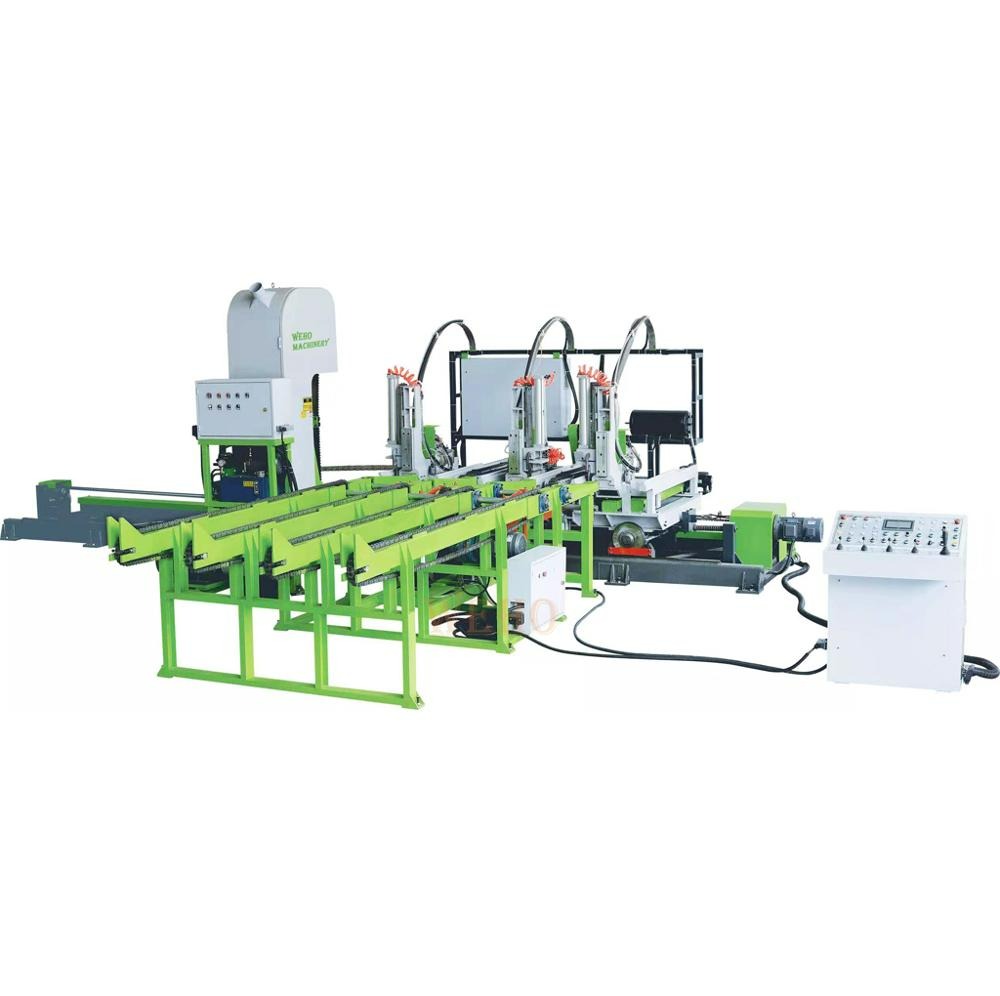
Spindle Moulder Guide for Furniture Factories 2026
Many furniture factories still rely on router tables for heavy shaping. This often results in lower efficiency, reduced accuracy, and shorter tool life. A spindle moulder offers greater power, repeatability, and output for professional production. This guide covers what a spindle moulder is, its main uses, types, selection tips, common problems, and recommended WEHO models.

What Is a Spindle Moulder?
A spindle moulder, also known as a spindle shaper or wood moulder, is a stationary woodworking machine centered on a vertical rotating spindle. The spindle holds interchangeable cutter heads or profile knives and turns at high speed while the operator feeds the workpiece against the spinning cutters. This process shapes edges, forms decorative profiles, or creates precise joinery elements. Most industrial models use a 30 mm or 35 mm diameter spindle and run at speeds ranging from about 3,000 to 10,000 rpm. They accept large, heavy cutter blocks and rely on a solid cast-iron or heavy steel table together with a rigid fence system for accurate guidance and support.
The robust design gives these machines far greater capacity for continuous heavy work than a typical router table. Because the spindle is fixed in a sturdy housing and driven by a powerful motor, vibration stays low even when large-diameter tooling is used. Operators can therefore produce long, consistent runs of moulding or frame components with far less fatigue and far higher dimensional accuracy.
How It Compares to Other Machines
When placed beside a router table or a four-side planer, the spindle moulder occupies a practical middle position. A router table works adequately for light shaping and small pieces, yet it lacks the power and rigidity required for continuous heavy profiling of dense hardwoods. A four-side planer processes all four faces of square stock at high volume, but it offers limited flexibility once the cutters are set for a particular profile. The spindle moulder combines strong cutting capacity with the ability to change tooling quickly, making it ideal for mixed production where edge shapes and joint details change several times a day.
Main Uses in Furniture and Joinery Factories
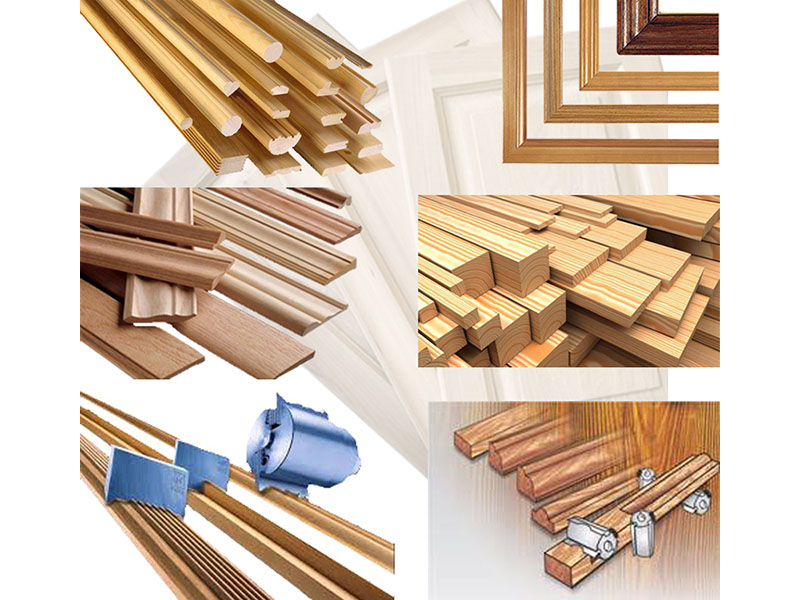
Furniture and joinery factories rely on spindle moulders for a broad range of daily production tasks. The machines form rebates, grooves, and decorative edges on door and window frame stiles and rails. They generate long runs of uniform profiles for skirting boards, architraves, and picture-frame stock. They shape crown mouldings, baseboards, and the edges of solid-wood or veneered panels. In addition, they cut tenons, tongues, grooves, and slots that create strong, accurate joints in chairs, tables, cabinets, and architectural joinery.
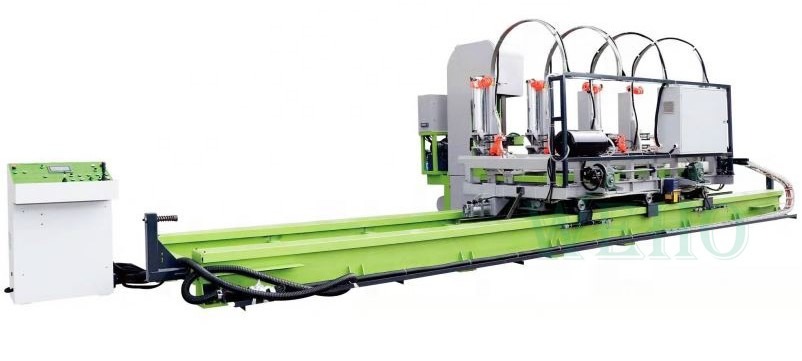
Because the spindle accepts large cutter blocks, factories can produce complex profiles in a single pass that would otherwise require multiple router setups. The result is faster throughput and fewer handling steps.
Applications in Cabinet Shops and High-Volume Production
In cabinet shops the same machine shapes drawer fronts, raised-panel doors, and frame-and-panel components. It readily processes thick hardwoods such as oak, beech, and maple that would quickly overload a router. High-volume factories almost always fit a power feeder. The feeder maintains a constant, controlled feed rate, improves surface finish, and reduces operator fatigue during long production runs. For lighter or highly customized work, skilled operators can still feed material by hand provided proper guards, push blocks, and hold-downs are in place. In both cases the machine delivers the repeatability that modern furniture production demands.
Types of Spindle Moulders
Factories select different configurations according to the nature of their work. Fixed-spindle models keep the spindle permanently vertical. They are mechanically simple, extremely rigid, and well suited to standard edge profiling and straight moulding. Tilting-spindle models, usually adjustable through a range of ±45°, allow angled cuts and are valuable for complex profiles, splayed joinery, and certain types of decorative work.
Some machines incorporate a sliding table. The sliding table simplifies tenoning, end-grain shaping, and the safe handling of longer or heavier components. Fixed-table models remain the preferred choice when the primary task is long-edge profiling in which the workpiece travels along a stationary fence.
Single-Spindle Versus Multi-Spindle Options
Single-spindle machines continue to be the most common and versatile choice for the majority of furniture factories. Multi-spindle versions can perform several operations in one pass and therefore suit specialized high-volume lines, yet they cost more and require more floor space. Light-duty models serve smaller workshops that need occasional capacity. Medium- and heavy-duty machines are built for continuous production and the higher loads imposed by dense hardwoods. WEHO Machinery supplies a practical selection across this spectrum, including tilting models and machines equipped with sliding tables specifically intended for furniture manufacturing.
How to Choose the Right Spindle Moulder
Choosing the correct machine has a direct effect on product quality and long-term operating costs. Motor power is the first decision point. Continuous work in hardwood usually requires at least 5.5 to 7.5 kW; lighter softwood work can manage with lower power. Spindle rigidity and runout are equally critical. Runout of 0.01 to 0.02 mm or less keeps vibration low and surface finish high. Excessive runout quickly produces chatter marks and uneven profiles that waste both material and time.
Multiple spindle speeds or true variable-speed control allow the operator to match peripheral speed to cutter diameter and material hardness. It is also essential to verify the maximum cutter diameter and weight the spindle can safely carry. A heavy, flat table and a rigid, accurately adjustable fence system improve both accuracy and operator safety. Essential safety features include effective guarding, a reliable spindle brake, and a clearly accessible emergency stop. Finally, confirm that technical support and spare parts remain readily available so that downtime stays minimal.
Key points to verify before purchase include:
- Adequate motor power for the densest materials you process
- Low spindle runout (ideally 0.02 mm or less)
- Compatibility with the cutter diameters and weights you plan to use
- Availability of local technical support and spare parts
Matching Capacity to Workshop Needs
|
Workshop Type |
Recommended Power |
Key Features Recommended |
Typical Use Case |
|
Small workshops |
3–5.5 kW |
Basic fixed spindle |
Occasional custom work, softwoods |
|
Medium furniture shops |
5.5–7.5 kW |
Tilting option or sliding table |
Mixed hardwood/softwood, doors & cabinets |
|
High-volume factories |
7.5 kW or higher |
Heavy spindle + power feeder readiness |
Continuous production, dense hardwoods |
A practical capacity guide helps match the machine to the size and intensity of the workshop. The table below summarizes typical recommendations based on common factory requirements.
Factories should avoid the cheapest machines that rely on low-grade spindle bearings or lightweight tables. Such models often develop excessive runout within a short time and ultimately raise tooling and maintenance costs.
Common Problems and Solutions
Even well-engineered machines can encounter occasional problems. Chatter, visible as regular vibration marks on the finished surface, usually stems from dull cutters, excessive spindle runout, or a loose setup. The remedy is to sharpen or replace the cutters, measure and correct runout, and confirm that feed rate and spindle speed are appropriate. Burning of the wood surface appears when knives are dull, feed speed is too slow, or spindle speed is mismatched to the cutter diameter. Sharp tooling, a modest increase in feed rate, and correct speed selection eliminate most burning. Tear-out occurs when the cut runs against the grain or when the cutters have become dull. Taking lighter passes, keeping tools sharp, and ensuring firm workpiece support reduce tear-out dramatically.
Addressing Spindle Runout and Daily Maintenance
Spindle runout or vibration frequently points to worn bearings or incorrect tool mounting. Inspect the bearings at the intervals recommended by the manufacturer and replace them when necessary. Always clean the spindle taper or flange thoroughly and seat cutters correctly before tightening. Daily maintenance prevents the majority of problems. Operators should remove dust and resin regularly, check cutter tightness at the start of each shift, lubricate moving parts according to the manual, and inspect all guards and safety devices every day. Consistent care keeps the machine accurate and extends bearing life considerably.
Spindle Moulder vs Router Table
A spindle moulder delivers higher precision on large profiles and markedly faster production on long runs. Although the initial tooling investment is higher, the cutters last longer under industrial conditions. When fitted with proper guards and a power feeder, the machine is safer for continuous work and is clearly better suited to factory production. A router table costs less to purchase and remains useful for small or one-off pieces, yet it runs more slowly on long profiles, requires more frequent bit changes, and carries greater risk when large-diameter bits are used. Most furniture factories therefore add a spindle moulder once daily volume moves beyond occasional custom work.
Recommended WEHO Models
WEHO Machinery, based in Foshan, China, manufactures a practical range of spindle moulders intended for furniture factories. The MX5115 is a 45-degree tilting-table spindle shaper suited to furniture trimming and slotting; the tilting function adds valuable flexibility for angled profiles. The MB9010A is a high-speed spindle moulding and grooving machine designed specifically for door and window frame production. The MX5117B is a vertical spindle moulder fitted with a sliding table that simplifies tenoning and the safer handling of longer pieces. The MB9015A handles irregular or abnormal-shape grooving when more complex profiles are required.
These machines are engineered for industrial duty. WEHO emphasizes solid construction, practical features, and reliable support for export customers. Complete specifications and quotation requests are available on the product pages at wehomachinery.com.
Frequently Asked Questions
Can a spindle moulder process hardwood?
Yes. Heavy-duty models successfully handle oak, beech, maple, and other dense species when fitted with adequate motor power and sharp, balanced cutters.
What power supply do industrial spindle moulders need?
Most industrial machines require three-phase electricity. Buyers should always confirm the exact voltage and phase requirements with the supplier before ordering.
How should I choose and use cutters?
Select cutters that match the required profile. Use only balanced, high-quality heads and stay within the machine’s stated maximum diameter and weight limits.
What daily and periodic maintenance is required?
Clean the machine daily, check cutters and guards at the start of every shift, and follow the manufacturer’s schedule for bearing inspection and lubrication (typically every few hundred hours). Consistent care keeps the machine accurate and reliable.
Is a power feeder necessary?
A power feeder is strongly recommended for production work. It improves consistency, reduces operator fatigue, and increases overall safety.
Conclusion
A spindle moulder provides the power and consistency furniture factories need. Focus on spindle quality, power, and support when selecting a machine. WEHO Machinery offers practical industrial models from Foshan, China—contact them for a free quote or recommendation.