Vertical Or Horizontal Bandsaw: Which Is Better?
Introduction
In the world of industrial woodworking and timber processing, the band saw is the indispensable powerhouse that serves as the backbone of production. Choosing between a vertical or horizontal configuration is a critical decision that directly impacts your workshop's efficiency and material utilization. While both machines utilize a continuous looped blade, they serve vastly different roles in the manufacturing workflow. The core of this debate lies in determining which setup can maximize your output while minimizing waste, ensuring that your equipment investment aligns perfectly with your specific brand requirements and professional operational goals.
How do Horizontal Band Saws Work?
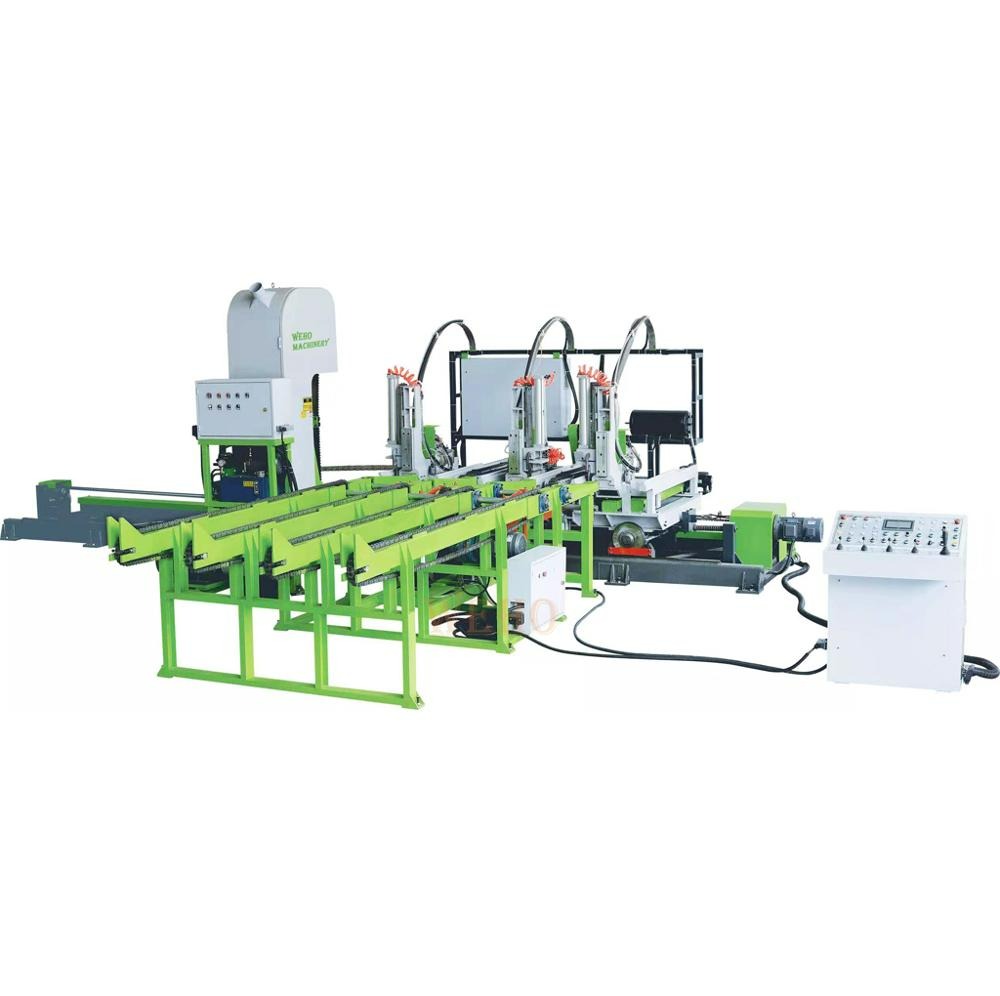
The horizontal band saw is designed for stability and heavy-duty primary cutting. Its mechanical structure features a saw head that moves along a set of tracks or rails, allowing it to traverse the length of the material. In terms of power systems, these machines typically utilize either a gravity feed, where an adjustable spring manages the descent, or a more precise hydraulic feed system for consistent cutting pressure. The cutting logic is straightforward: the material remains securely clamped and stationary on the bed while the saw head moves through it, making it ideal for processing massive, heavy workpieces that are difficult to maneuver.
How do Vertical Band Saws Work?
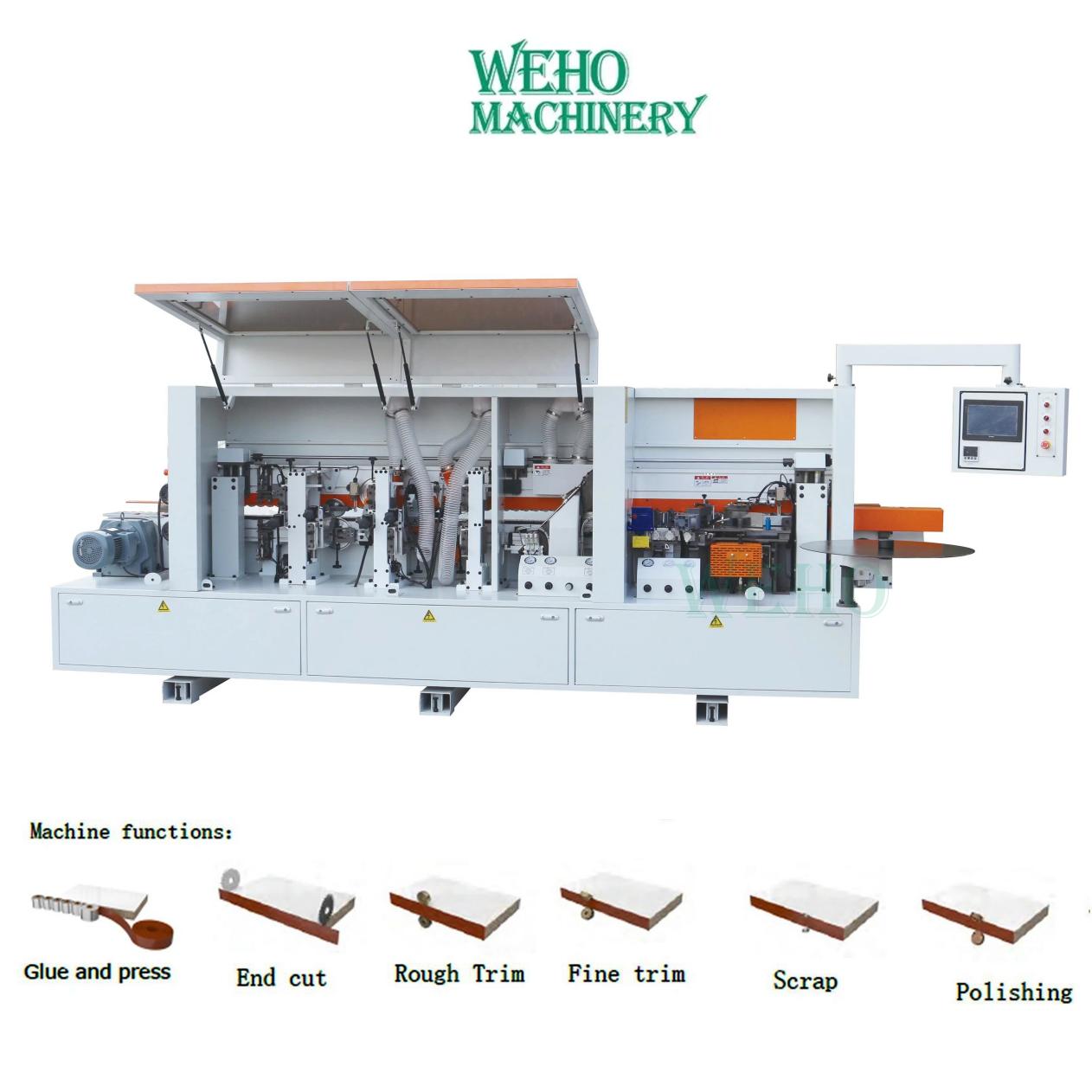
A vertical band saw operates as a versatile precision tool where the blade runs vertically through a fixed worktable. Unlike its horizontal counterpart, the operational mode usually involves the operator guiding the material toward the stationary blade. For professional environments, a power feeder can be attached to ensure a consistent feed rate and improved safety. The cutting logic here is inverted: the saw head remains fixed while the material moves, providing the operator with the freedom to navigate complex shapes, curves, and fine adjustments that are impossible on a moving-head system.
Advantages Of Horizontal Bandsaw
The horizontal bandsaw is the undisputed leader in large-diameter material processing, making it the premier choice for the initial breakdown of massive raw logs. Its design offers significant automation potential, especially when equipped with digital setworks for the high-volume production of standard dimensioned lumber. Furthermore, because the machine handles the weight of the saw head and the clamping of the material, it offers lower operator physical intensity. This not only increases safety but also allows for a more consistent production pace in industrial B2B environments.
Advantages of Vertical Bandsaw
The vertical bandsaw excels in precision resawing, allowing professionals to slice thick boards into thin, matching veneers with incredible accuracy. Its ability to handle irregular shapes, intricate curves, and live-edge slabs makes it a favorite for custom furniture manufacturing. Beyond raw power, the vertical structure offers significant space optimization, utilizing vertical height rather than requiring the long floor tracks associated with horizontal mills. This multi-functionality extends to post-processing tasks such as trimming, squaring up small blocks, and cutting joinery, making it a highly adaptable asset for any specialized workshop.
Horizontal vs Vertical Band Saw Differences
To help visualize the technical differences, the following table compares the two configurations across key performance metrics:
|
Feature |
Horizontal Band Saw |
Vertical Band Saw |
|
Primary Motion |
Saw head moves along tracks |
Material moves against fixed blade |
|
Best For |
Log breakdown & bulk cutting |
Resawing, curves & fine joinery |
|
Space Required |
Large (Horizontal footprint) |
Small (Vertical footprint) |
|
Material Weight |
Handles heavy, large logs |
Better for manageable boards/slabs |
|
Automation |
High (Hydraulic/Digital) |
Moderate (Power feeders) |
|
Cutting Accuracy |
High stability for long cuts |
Superior for intricate detail |
Additionally,differs significantly, with vertical saws often featuring integrated dust ports that are more compatible with standard shop extraction systems compared to the open-track design of horizontal mills.
What Each Type is Best Suited For
Identifying the right machine depends heavily on your specific operational scenario.
- Scenario A: The Mobile Mill or Farm Owner – If you are cutting raw logs into rough-sawn lumber in the field, a horizontal band saw is the logical choice for handling raw timber efficiently.
- Scenario B: Furniture Makers & Joinery Shops – For creating high-end furniture, resawing expensive hardwoods, or working with curved components, the vertical band saw is the mandatory tool.
- Scenario C: Metalworking Facilities – Horizontal saws are utilized for bulk cutoff work, while vertical saws are reserved for contouring and detail work.
Critical Considerations for Your Selection
Selecting the correct mill requires a deep dive into your material requirements, specifically the maximum diameter of the logs or stock you intend to process. You must also evaluate your accuracy requirements—determine if you need rough-sawn lumber for construction or finished surfaces for high-end cabinetry. Budget and maintenance are equally important, as you must factor in initial procurement costs alongside the long-term expense of blade wear and power consumption. Finally, consider future expansion; choosing a platform that allows for the later addition of automated feeding systems ensures your workshop can evolve.
Conclusion
In the debate between vertical and horizontal bandsaws, the best choice depends entirely on your specific production needs. WEHO is dedicated to providing high-performance woodworking machinery designed to maximize efficiency and long-term ROI, and we recommend selecting a model that masters 80% of your daily workload to ensure optimal workflow. To find the perfect fit for your workshop and elevate your timber processing capabilities, contact WEHO today for a professional consultation.
FAQs
Q: Can a horizontal bandsaw do resawing?
A: While possible, it is less efficient for thin veneers; a vertical saw provides much better visibility and manual control for high-precision resawing tasks.
Q: Which saw is safer for a solo operator?
A: Horizontal saws are generally safer for primary log breakdown because the material is securely clamped and the cutting process is often automated, whereas vertical saws require more direct hand-to-material interaction.
Q: How do I stop my blade from drifting?
A: The key is maintaining proper blade tension according to manufacturer specifications, ensuring your guides are perfectly aligned, and using a sharp blade specifically suited for your material's density.
Q: Does a vertical saw take up less space?
A: Yes, significantly; a vertical saw utilizes vertical height and fits into a compact corner, while a horizontal mill requires a long track system to accommodate the full length of the logs being processed.
Q: Which is better for metal cutting?
A: For cutting bar stock or pipes to a specific length, a horizontal saw is superior, but for cutting intricate shapes or contours out of metal plates, a vertical saw is the necessary tool.