Wire Saw vs Band Saw for Wood: Which Cutting Method Is Better for Your Production
Choosing between wire saws and band saws requires more than comparing cutting speed. Material compatibility, cutting accuracy, production volume, and maintenance requirements all affect equipment performance. Understanding these differences helps woodworking manufacturers make a more suitable investment.
How Do Wire Saw and Band Saw Cutting Methods Differ?
Although both machines are used for cutting materials, their cutting structures and applications are different.
How Wire Saw Works
Wire saws use a tensioned wire that moves along a defined cutting path. Depending on the machine design, cutting may rely on an abrasive wire surface or another specialized cutting structure.
This method is generally suited to applications requiring specific cutting paths or workpiece geometries. Actual performance depends on wire design, material properties, and operating conditions.
How Band Saw Work
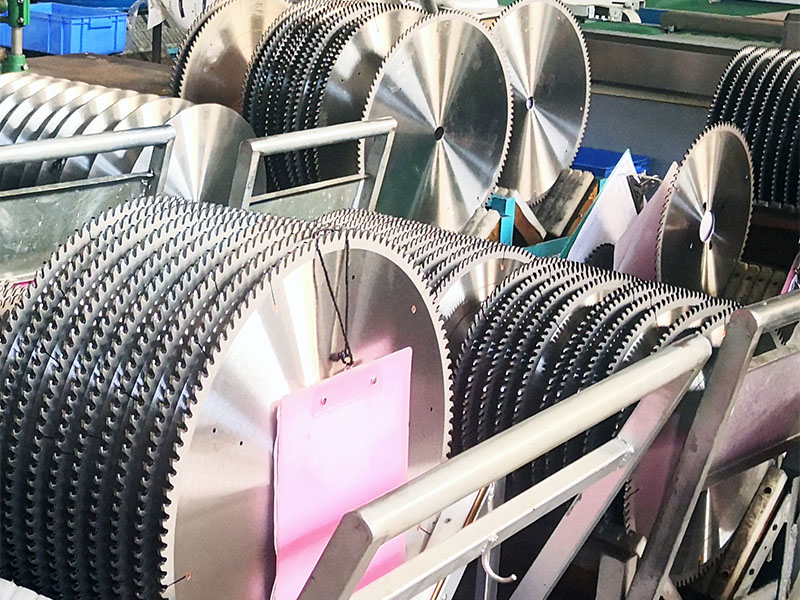
Band saws operate with a continuous toothed blade running around two or more rotating wheels. Teeth remove material as the blade passes through the workpiece.
In woodworking, band saws are widely used for log breakdown, resawing, and processing solid timber. Different machine configurations support different workpiece sizes and production requirements.
Wire Saw vs Band Saw: Key Performance Comparison
Choosing the right cutting method depends on how each machine performs under actual production conditions.
|
Comparison Factor |
Wire Saw |
Band Saw |
|
Cutting element |
Tensioned wire |
Continuous toothed blade |
|
Cutting principle |
Wire-based cutting, depending on design |
Teeth remove material during blade movement |
|
Kerf width |
Depends on wire diameter and cutting structure |
Depends on blade thickness and tooth setting |
|
Cutting speed |
Varies by wire type and material |
Varies by blade specifications and feed speed |
|
Cutting accuracy |
Depends on wire tension, guidance, and workpiece properties |
Depends on blade condition, alignment, and machine stability |
|
Typical applications |
Specialized cutting paths and geometries |
Log sawing, resawing, and solid wood processing |
|
Maintenance |
Wire condition and tension require attention |
Blade condition, tooth geometry, and sharpening require regular checks |
Kerf Width and Material Utilization
Kerf width determines how much material is removed during cutting. Narrower kerfs can reduce material loss, which is particularly important when processing expensive or limited raw materials.
Wire diameter and cutting structure influence wire saw kerf width. Band saw kerf depends on blade thickness and tooth setting. Actual material savings also depend on cutting accuracy, blade stability, and the number of cuts required.
Manufacturers should evaluate material yield through sample cutting rather than relying on kerf width alone.
Cutting Capacity and Production Output
Production output depends on more than the cutting mechanism. Material dimensions, feed speed, machine power, and operating stability all influence throughput.
Band saws are commonly used in industrial timber processing because they can handle a range of log sizes and solid wood cutting tasks. Machine configuration and blade selection determine their suitability for different production volumes.
Wire saw performance varies considerably with wire design and application. Buyers should confirm cutting speed and continuous operating capacity under actual material conditions before selecting equipment.
Cutting Accuracy and Surface Quality
Cutting accuracy is influenced by machine stability, cutting element condition, workpiece characteristics, and operating parameters.
For band saws, blade tension, alignment, tooth condition, and feed speed all affect cutting results. Poor blade condition can cause uneven cuts, surface defects, and material waste.
Wire saw accuracy depends on wire tension, guidance, cutting structure, and the properties of the material being processed. Neither method guarantees better results in every application. Sample testing provides a more reliable basis for comparison.
What Factors Affect Wood Cutting Performance?
Even with suitable equipment, inconsistent operating conditions can reduce cutting quality and production efficiency.
|
Factor |
Impact on Cutting |
What Manufacturers Should Check |
|
Wood species |
Density and grain structure affect cutting resistance |
Confirm compatibility with the intended material |
|
Moisture content |
Moisture variation can influence cutting behavior and workpiece stability |
Test materials at actual production moisture levels |
|
Workpiece dimensions |
Larger or irregular workpieces may require different machine configurations |
Check maximum cutting dimensions |
|
Feed speed |
Excessive feed speed may affect cutting quality and stability |
Match feed speed to material and blade specifications |
|
Cutting element condition |
Wear can lead to uneven cuts and reduced efficiency |
Inspect wires or blade teeth regularly |
|
Machine alignment |
Misalignment can affect cutting accuracy |
Check guides, wheels, and machine positioning |
These factors should be considered together. For example, increasing feed speed does not necessarily improve output if blade condition or machine stability cannot support the change.
When Should You Choose a Wire Saw or Band Saw?
The right choice depends on the material, cutting geometry, and production process.
When a Wire Saw Is Suitable
Wire saws may be suitable when production involves specialized cutting paths or workpiece geometries that match the machine's design.
Before purchasing, manufacturers should evaluate:
- Required cutting shape and dimensions.
- Wire type and compatibility with the material.
- Expected cutting accuracy and surface quality.
- Wire replacement and maintenance requirements.
- Actual cutting speed under production conditions.
Wire saws should be selected according to their specific application rather than treated as a universal replacement for conventional wood-cutting equipment.
When a Band Saw Is Suitable
Band saws are a practical option for many industrial woodworking operations, especially log breakdown, resawing, and solid timber processing.
They are worth considering when production requires:
- Processing logs or large solid wood workpieces.
- Repeated straight cuts and resawing operations.
- Different cutting capacities for different timber dimensions.
- Continuous operation in woodworking production lines.
- Flexible blade selection for different materials and cutting tasks
For manufacturers processing timber regularly, blade condition and sharpening efficiency also influence long-term production costs.
What Should Manufacturers Check Before Purchasing Wood Cutting Equipment?
Equipment selection should start with production requirements, not machine price alone. Reviewing the following points can help reduce purchasing risks.
|
Evaluation Point |
Key Questions |
|
Material compatibility |
Can the machine process the wood species and moisture levels used in production? |
|
Cutting dimensions |
Does its capacity cover the maximum workpiece size? |
|
Production volume |
Can it meet the required output during continuous operation? |
|
Cutting tolerance |
Does sample testing meet the required dimensional accuracy? |
|
Consumables |
What are the replacement costs for wires, blades, and other wear parts? |
|
Maintenance |
Are spare parts and technical support readily available? |
|
Production integration |
Can the machine fit into the existing workflow? |
Sample testing is particularly important. Manufacturers should provide actual workpiece materials and evaluate cutting accuracy, surface quality, processing time, and material loss before making a final decision.
Band Saw Blade Maintenance and Its Impact on Production
For band saw users, blade condition directly affects cutting consistency and operating efficiency. Worn teeth, uneven sharpening, and incorrect blade geometry can lead to rough surfaces, inaccurate cuts, and unnecessary downtime.
Regular maintenance should cover several areas:
- Tooth condition: Check for worn, chipped, or damaged teeth.
- Tooth geometry: Maintain consistent tooth profiles and sharpening angles.
- Blade tension and alignment: Ensure stable blade operation during cutting.
- Sharpening intervals: Establish maintenance schedules based on operating hours and material conditions.
- Blade replacement: Replace blades when damage or wear makes further sharpening unsuitable.
Automatic sharpening equipment can help woodworking manufacturers maintain consistent blade conditions and reduce manual sharpening work.
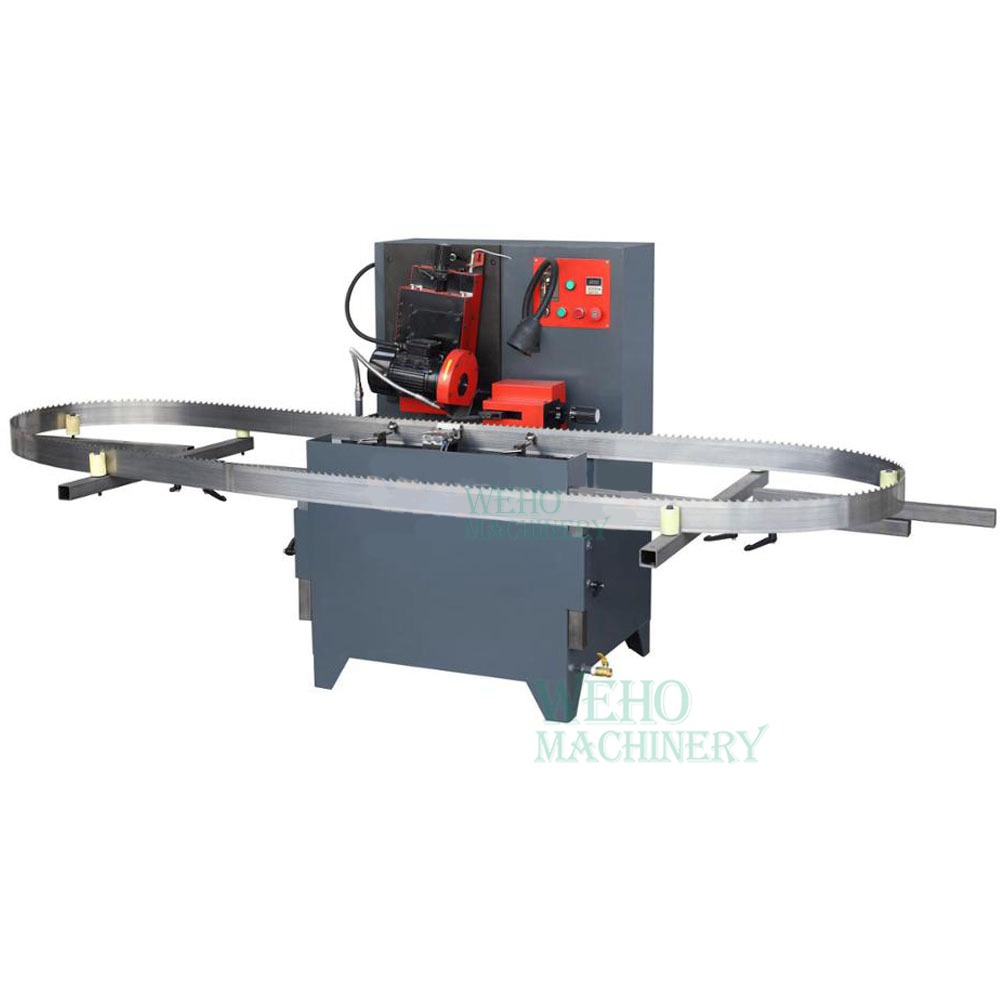
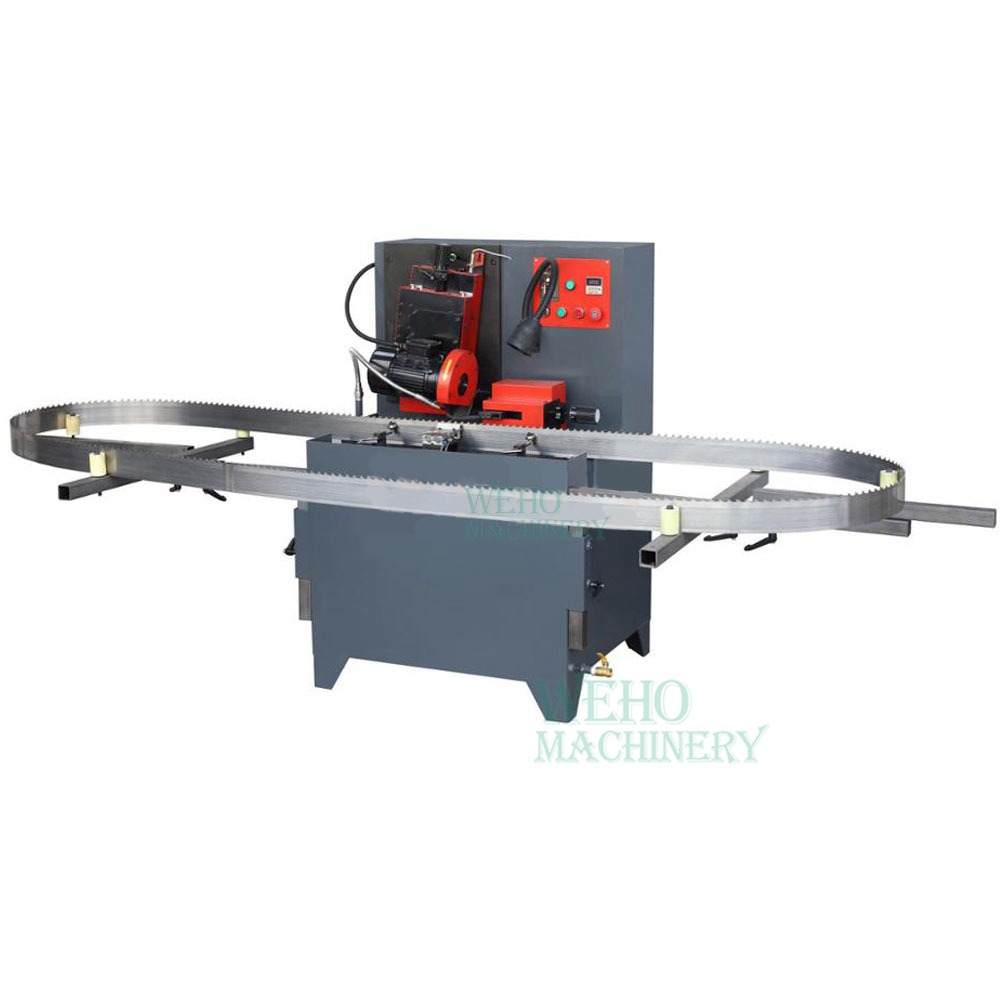
WEHO provides automatic band saw blade grinding solutions for different blade specifications:
MF-05 Automatic Band Saw Blade Grinder
MF-05 supports blade widths of 27–150 mm and thicknesses of 0.6–3 mm, with a maximum grinding length of 5,000 mm. It is designed for sharpening sawmill band saw blades.
Product details: MF-05 Automatic Band Saw Blade Grinder
MF600 Automatic Band Saw Blade Grinder
MF600 supports carbide-tipped, HSS, and BI dual band saw blades. Its maximum blade width is 125 mm, with a grinding length of up to 8,000 mm.
Product details: MF600 Automatic Band Saw Blade Grinder
Selecting suitable sharpening equipment helps maintain blade performance and supports more consistent woodworking operations.
Common Mistakes When Selecting Wood Cutting Equipment
Several purchasing decisions can lead to unnecessary costs or poor production results.
- Comparing machines only by cutting speed: Higher speed does not always mean better output if accuracy and material yield are compromised.
- Ignoring material differences: Wood species, density, and moisture content can change cutting performance.
- Overlooking consumable costs: Blade or wire replacement and maintenance should be included in long-term cost calculations.
- Skipping sample tests: Published specifications cannot fully represent performance under actual production conditions.
- Choosing equipment without considering workflow: Machine capacity should match upstream and downstream production processes.
Evaluating the complete production process gives manufacturers a more realistic picture of equipment value.
Conclusion
Wire saws serve specialized cutting applications, while band saws remain widely used for industrial timber processing and resawing. WEHO provides woodworking machinery and automatic band saw blade sharpening solutions. Contact our team with your material and blade specifications to discuss suitable equipment for your production needs.