Rapid Glue Curing with High-Frequency Technology – Advantages for Manufacturers
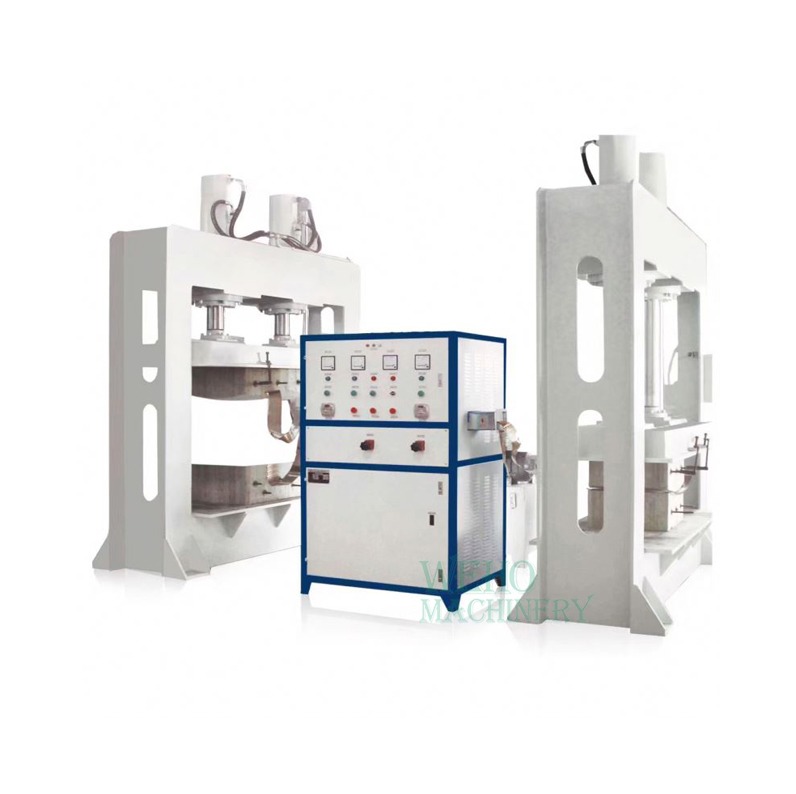
High-frequency technology enables rapid glue curing in plywood and veneer production. Manufacturers using a high frequency plywood press gain faster cycles, uniform internal curing, and higher output with the hydraulic plywood laminating hot press designed for wood veneer bending.
How High-Frequency Technology Delivers Rapid Glue Curing
High-frequency technology works through dielectric heating. When high-frequency voltage is applied, the electromagnetic field generates heat directly inside the glue line. This creates true internal curing. Heat builds uniformly from the inside of the workpiece rather than transferring slowly from the surface.
On a high frequency plywood press, glued wood veneer or solid wood veneer is placed into a prefabricated wood mold. Pressure is applied and high-frequency voltage is introduced. The glue rapidly heats and solidifies under the high-frequency electromagnetic field. After a short cooling period the mold opens and the finished part is removed.
The result is rapid glue curing that typically takes only 2–3 minutes. This is significantly faster than conventional hot-press methods that rely on external heat transfer through platens.
Key Advantages of Rapid Glue Curing with High-Frequency Technology
Faster Production Cycles and Higher Output
Rapid glue curing of 2–3 minutes allows manufacturers to complete more cycles per shift. A high frequency plywood press can operate with one station working while another is prepared. This alternating workflow shortens overall production time and raises daily output without increasing labor.
Uniform Internal Curing for Stronger Bonds
Because high-frequency technology heats the glue from within, curing is even throughout the glue line. This internal curing reduces the risk of weak spots that can occur when heat travels slowly from the outside. The finished curved plywood or laminated veneer parts show consistent strength and reliable performance.
Excellent Shape Stability and Low Deformation
Parts produced with high-frequency technology and proper pressure maintain their shape. The high setting achieved during rapid glue curing means the product is not easy to deform after pressing. This stability is especially valuable for curved furniture components, musical instrument parts, and skateboard molds.
Low-Cost Wood Molds and Easy Changeovers
The high frequency plywood press uses wood molds. These molds offer low cost, small heat loss, simple operation, and convenient replacement. Manufacturers can change product designs quickly and keep mold investment low while still achieving precise results on a hydraulic plywood laminating hot press.
Environmental and Operational Benefits
High-frequency technology requires only electricity. There is no boiler, no smoke, and no dust. The process is clean and environmentally friendly. Factories avoid the infrastructure and pollution associated with traditional steam or oil-heated presses while still achieving rapid glue curing.
Flexible Multi-Station Configurations
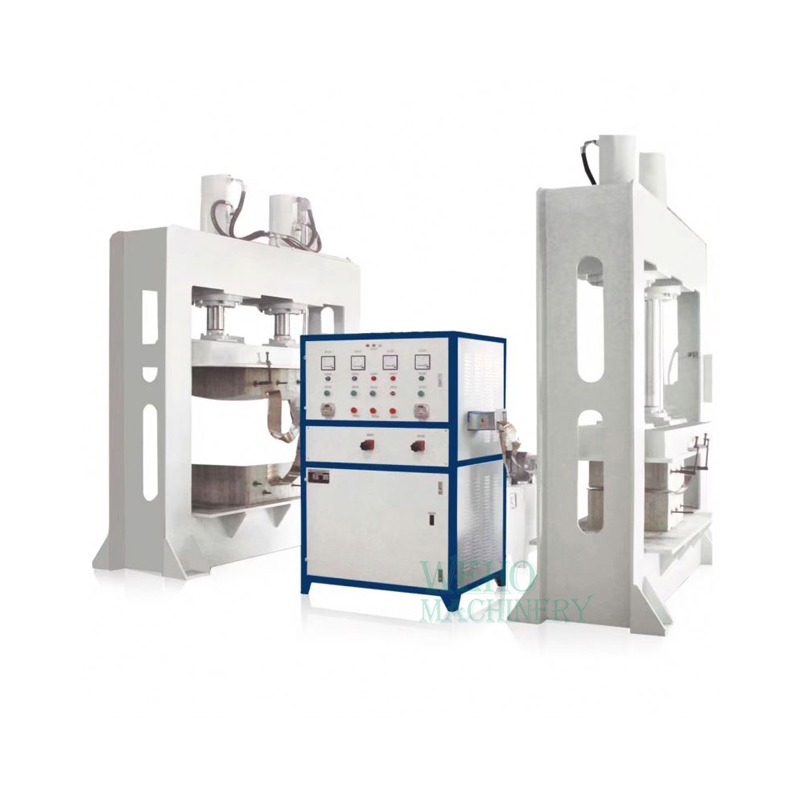
A single high-frequency generator can support multiple hydraulic presses. Configurations such as one-belt-two, one-drag-three, or one-drag-four allow continuous workflow. One press works while others are loaded or prepared, maximizing the benefit of rapid glue curing.
Comparison: Traditional Hot Press vs High-Frequency Technology
|
Aspect |
Traditional Hot Press |
High-Frequency Technology |
|
Heating method |
External platen heat |
Internal dielectric heating |
|
Typical curing time |
Longer cycles |
2–3 minutes (rapid glue curing) |
|
Heat distribution |
Surface to core |
Uniform internal curing |
|
Energy source |
Steam, oil, or electric platens |
Electricity only |
|
Mold type |
Often metal |
Low-cost wood molds |
|
Environmental impact |
Possible smoke and higher energy |
No pollution, clean process |
|
Suitability for curves |
Limited |
Excellent with vertical and side pressure |
|
Production flexibility |
Longer changeovers |
Fast mold changes and multi-station setups |
This comparison shows why manufacturers adopt high-frequency technology for rapid glue curing on a hydraulic plywood laminating hot press.
Practical Applications of High-Frequency Rapid Glue Curing
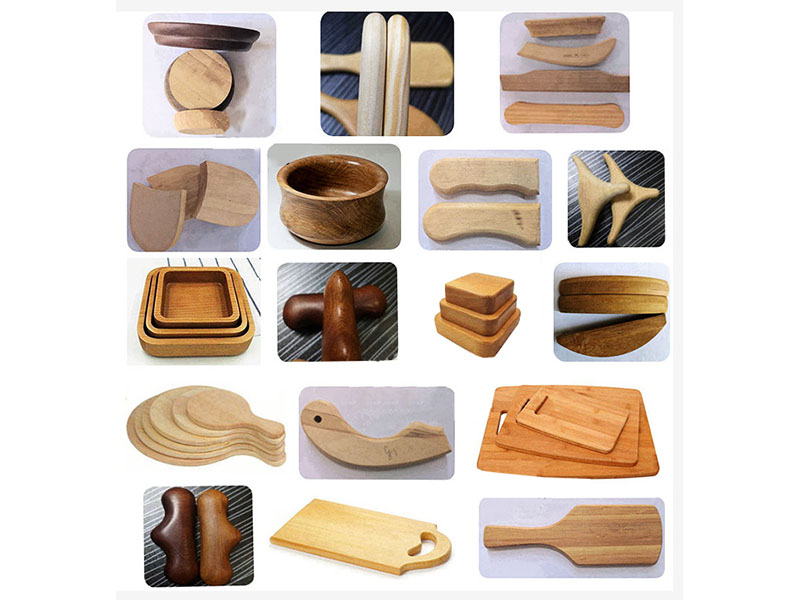
High-frequency technology is widely used for curved and laminated wood products. Typical applications include:
- Curved wood sofa frames and armrests
- Bent table and chair components
- Musical instrument curved surfaces
- Wooden shoe bottoms and lasts
- Skateboard molds and related sports components
- Panel furniture bedside parts, cabinets, and decorative bent panels
- Multi-layer boards and density board forming
The same high frequency plywood press handles both simple laminated panels and complex three-dimensional shapes when equipped with appropriate wood molds and side pressure.
What Manufacturers Should Look for in a High Frequency Plywood Press
When selecting equipment for rapid glue curing, focus on these practical points:
- Proven 2–3 minute rapid glue curing capability through high-frequency technology
- Stable hydraulic system with vertical pressure and optional side pressure
- Compatibility with low-cost wood molds that are easy to replace
- Support for multi-station or alternating work setups
- Customizable table size and pressure to match product range
- Clean, electricity-only operation with no pollution
- Reliable construction backed by manufacturing experience
The WEHO hydraulic plywood laminating hot press machine for wood veneer bending meets these requirements. It combines high-frequency technology for rapid glue curing with hydraulic pressure, wood-mold flexibility, and practical multi-station options.
View full details and specifications here:
Hydraulic plywood laminating hot press machine for wood veneer bending skateboard mold
Explore related equipment in the hot press category:
Hot Press Machine
Production Workflow with High-Frequency Technology
A typical sequence on a high frequency plywood press is straightforward:
Apply glue to wood veneer or solid wood layers.
Place the prepared stack into the prefabricated wood mold.
Close the press and apply the required hydraulic pressure.
Activate high-frequency voltage so the glue undergoes rapid internal curing.
Allow a short cooling period.
Open the mold and remove the finished curved or laminated part.
Because rapid glue curing takes only minutes, the entire cycle remains short and repeatable. Alternating stations further improve efficiency.
Why High-Frequency Technology Makes Sense for Modern Manufacturers
Manufacturers face pressure to increase output, reduce energy use, and maintain consistent quality on curved and specialty wood products. High-frequency technology addresses these needs directly through rapid glue curing, uniform internal heating, low mold costs, and clean operation.
The combination of high-frequency dielectric heating and hydraulic pressure on a properly designed press delivers stable, high-quality results while shortening production time. Factories that switch to this approach often gain both higher capacity and greater flexibility for product variety.
Conclusion
High-frequency technology provides manufacturers with rapid glue curing, uniform internal heating, and efficient production of curved plywood and veneer products. Contact WEHO Machinery to learn more about the hydraulic plywood laminating hot press that applies this technology.