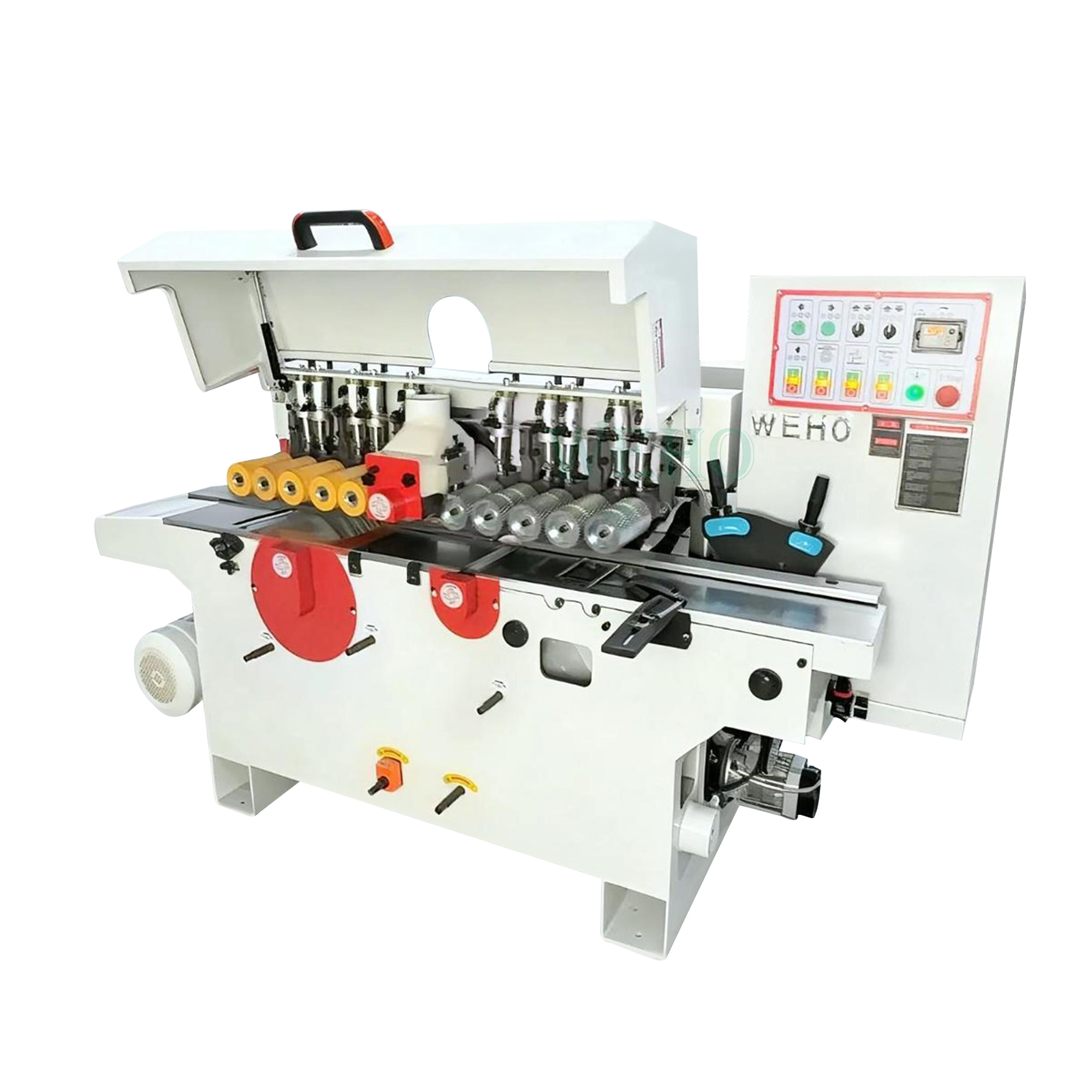
Wood Brushing Machine for WPC and Solid Wood Profile Processing
WPC decking and solid wood profiles have different surface treatment needs. WEHO's MF4 series offers wood brushing solutions for grain highlighting, profile brushing and surface cleaning.
Wood Brushing Requirements for WPC Decking
WPC decking is widely used in outdoor flooring and landscaping projects. Its surface appearance plays an important role in the finished product, especially when manufacturers want to create a wood-like texture.
Brushing can help bring out surface details on WPC profiles. The final result depends on material composition, brush type and machine settings.
When selecting a wood brushing machine for WPC, manufacturers should consider profile width, surface effect and brush configuration. Working width needs to match the dimensions of WPC products, while brush selection should reflect the texture required. Production requirements also matter, especially when the machine needs to fit into an existing processing workflow.
WEHO's MF4 series supports WPC decking profile brushing. Different configurations can be discussed according to your material and processing requirements.
Surface Treatment for Solid Wood Profiles
Solid wood profiles often need surface treatment to highlight natural grain or prepare the surface for further processing.
Steel wire brushes can remove softer parts of the wood surface, making natural grain more visible. This approach is useful when manufacturers want to create a textured appearance rather than a completely smooth finish.
For other surface requirements, nylon brushes can help clean the board surface. Sandpaper can also be used for wood profile polishing and denibbing.
|
Processing requirement |
Suitable configuration |
Main purpose |
|
Wood grain highlighting |
Steel wire brushes |
Bring out natural wood grain |
|
Surface cleaning |
Nylon brushes |
Clean the board surface |
|
Profile polishing and denibbing |
Sandpaper |
Treat the surface after processing |
Brush selection should follow the material and desired result. Steel wire brushes and nylon brushes can be used separately or together, depending on the processing requirements.
Steel and Nylon Brush Configurations
Different brushes serve different purposes. Understanding their functions helps manufacturers choose a more suitable machine configuration.
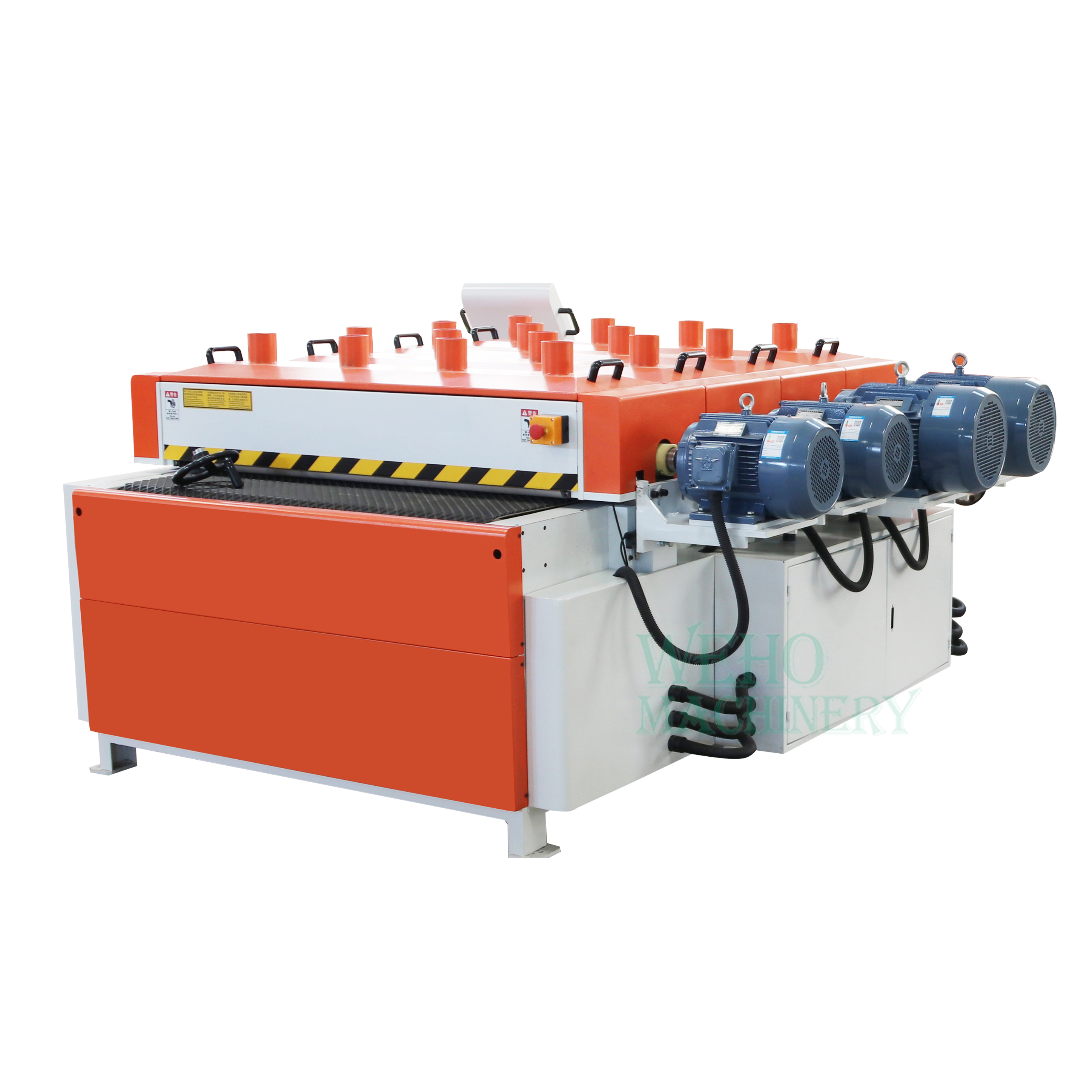
Steel Wire Brushes
Steel wire brushes are used to remove softer wood fibers and highlight natural grain. They are suitable for solid wood grain highlighting and related surface treatment applications.
The final texture can vary depending on the wood material and brushing conditions. Manufacturers should confirm the required effect before choosing brush specifications.
Nylon Brushes
Nylon brushes are mainly used for cleaning board surfaces. They can be combined with steel wire brushes when both grain highlighting and surface cleaning are required.
WEHO's MF4-400 wood brushing machine uses steel and nylon brushes for solid wood grain highlighting and surface processing.
Sandpaper and Optional Brush Configurations
Sandpaper can be used for wood profile polishing and denibbing. WEHO also offers optional vertical wire discs and modular brush configurations for different processing needs.
Before ordering, it is worth discussing the material, required surface effect and brush arrangement with the manufacturer. This helps avoid choosing a configuration that does not match your actual production requirements.
Working Width and Material Dimensions
Machine working width is an important factor when processing WPC decking and solid wood profiles. A machine that does not match your workpiece dimensions may not fit your production requirements.
WEHO offers several MF4 models with different working widths:
|
Model |
Working width |
Total power |
Weight |
|
400 mm |
31 kW |
800 kg |
|
|
600 mm |
31 kW |
1,100 kg |
|
|
1,320 mm |
43.5 kW |
2,500 kg |
When comparing models, check more than working width. Workpiece dimensions, material thickness, brush configuration and available workshop space also matter.
Providing these details before ordering helps WEHO understand your production needs and discuss a suitable machine setup.
Machine Adjustment and Production Requirements
A brushing machine should fit your processing workflow, not just your material size.
WEHO's MF4 series includes inverter control for adjusting brush rotation speed and feeding speed. Operators can also fine-tune table openings through a digital display and adjust feed-in table height to suit processing requirements. Hold-down rollers help hold workpieces during feeding, while modular brush configurations allow different arrangements for surface treatment.
These features give manufacturers options when adjusting machine settings for different processing needs. Actual results depend on the material, brush setup and operating conditions.
Custom Wood Brushing Machines from WEHO
WEHO Machinery Group has focused on woodworking machinery manufacturing since 2003. Its product range includes wood brushing machines, wood sanders, wood cutting machines and blade sharpening equipment.
For manufacturers processing WPC decking or solid wood profiles, machine selection should be based on actual workpiece dimensions and surface treatment requirements. WEHO's design team can discuss machine adjustments according to customer production conditions.
Before requesting a quotation, it helps to prepare details about your material type, workpiece width and thickness, required surface finish, processing arrangement and preferred working width. This gives the WEHO team a clearer picture of your production needs and helps move the equipment discussion forward.
Conclusion
Choosing suitable brushing equipment depends on your material and required finish. Contact WEHO to discuss your production needs and find a suitable MF4 machine configuration.